
From a leadership group to an aligned team
You leave the meeting aligned. Everyone nods. Decisions are made and agreed upon. Then it’s Monday. And somehow, the decision has six different versions, depending on which part of the organisation you ask.
At LQ, we see this pattern often, especially in management and top teams carrying significant pressure and complexity. In a recent conversation with Miranda Maes and Tamara Alen (both Business Transformation Architects at LQ), we reflected on what tends to sit underneath these symptoms and how frameworks like Lencioni’s help sharpen the work they already do with leadership teams. It’s not about a lack of intelligence or ambition, but a lack of the conditions that enable a team to operate as one.
One of the practical lenses we use to make those conditions visible is Patrick Lencioni’s question: are you truly a team, or simply a group of capable individuals working alongside each other?
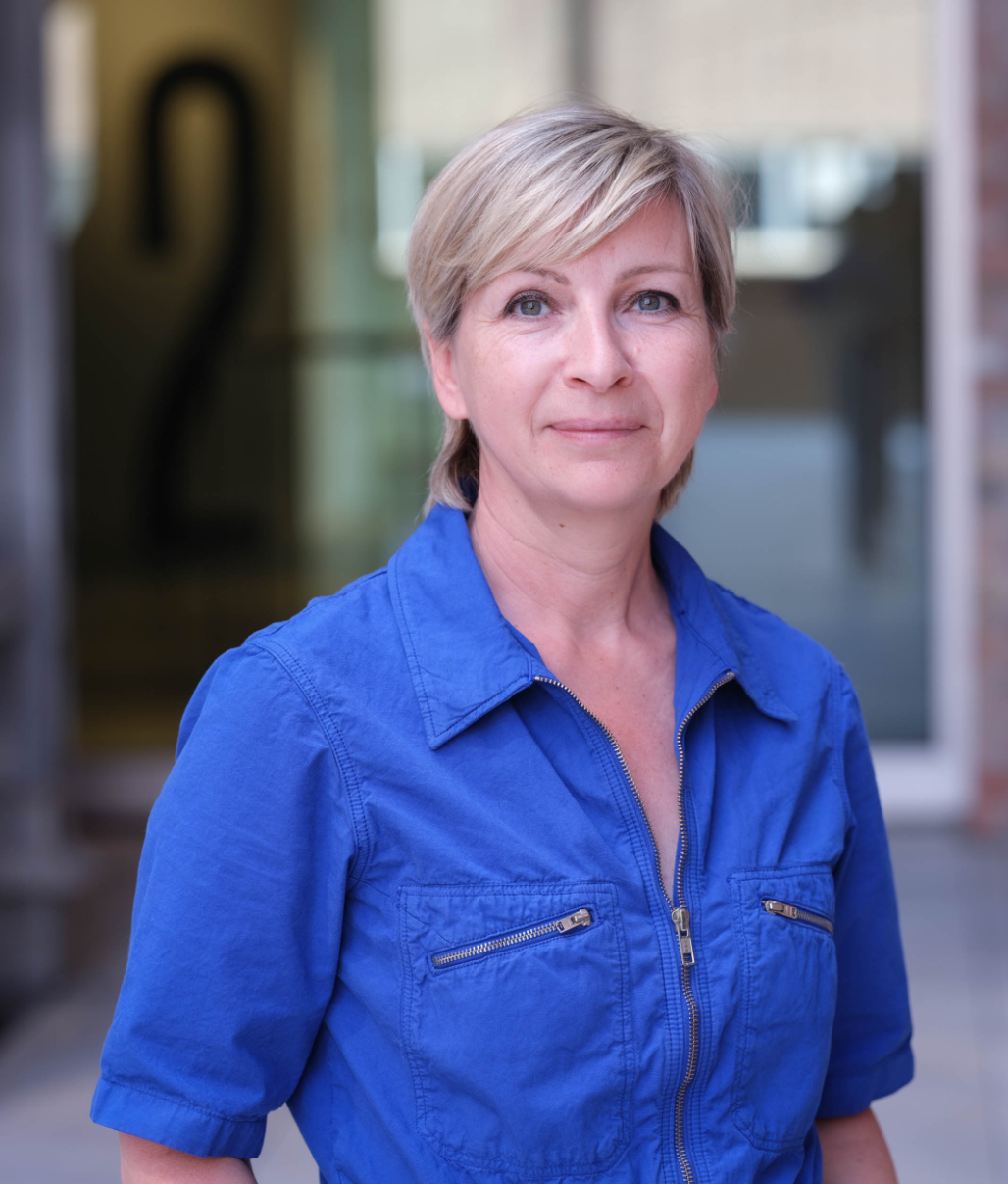
“A team is more than a group of people you put together.” – Miranda Maes, Business Transformation Manager
That distinction may sound simple. In reality, it changes everything.
When leadership teams talk about what’s not working, they often start with what they can see: Decisions that are made but not carried out, actions that lose momentum, and colleagues who avoid taking responsibility.
But those are usually symptoms, not causes.
As Tamara put it: “Teams almost always start with visible symptoms, like bad results, slow execution, diluted decisions, lack of ownership. But structurally, the real constraint sits much lower in the system. If we don’t address these issues, every intervention remains cosmetic. In executive teams, that usually becomes visible the moment you explore how decisions actually travel outside the meeting room.”
In our experience, the root cause of many top team issues come back to trust: in the willingness to be open, challenge one another, and stay in the conversation when it becomes uncomfortable.
Miranda reflected: “I don’t think I’ve ever had a case where trust wasn’t an element.”
When trust is thin, conflict becomes risky. People soften their message, postpone the real topic, or keep doubts to themselves. The meeting ends with apparent agreement, but not real commitment. Accountability then starts to feel like pushing or policing, rather than something the team owns together.
As Miranda described: “You have meetings where everyone walks out saying ‘we’ll do this’ and then they return to their own departments and say, ‘Well, that doesn’t apply to us.’”
This is exactly why we like to zoom out and look at the team as a system, because what shows up at the top is usually rooted in what’s happening at the base.
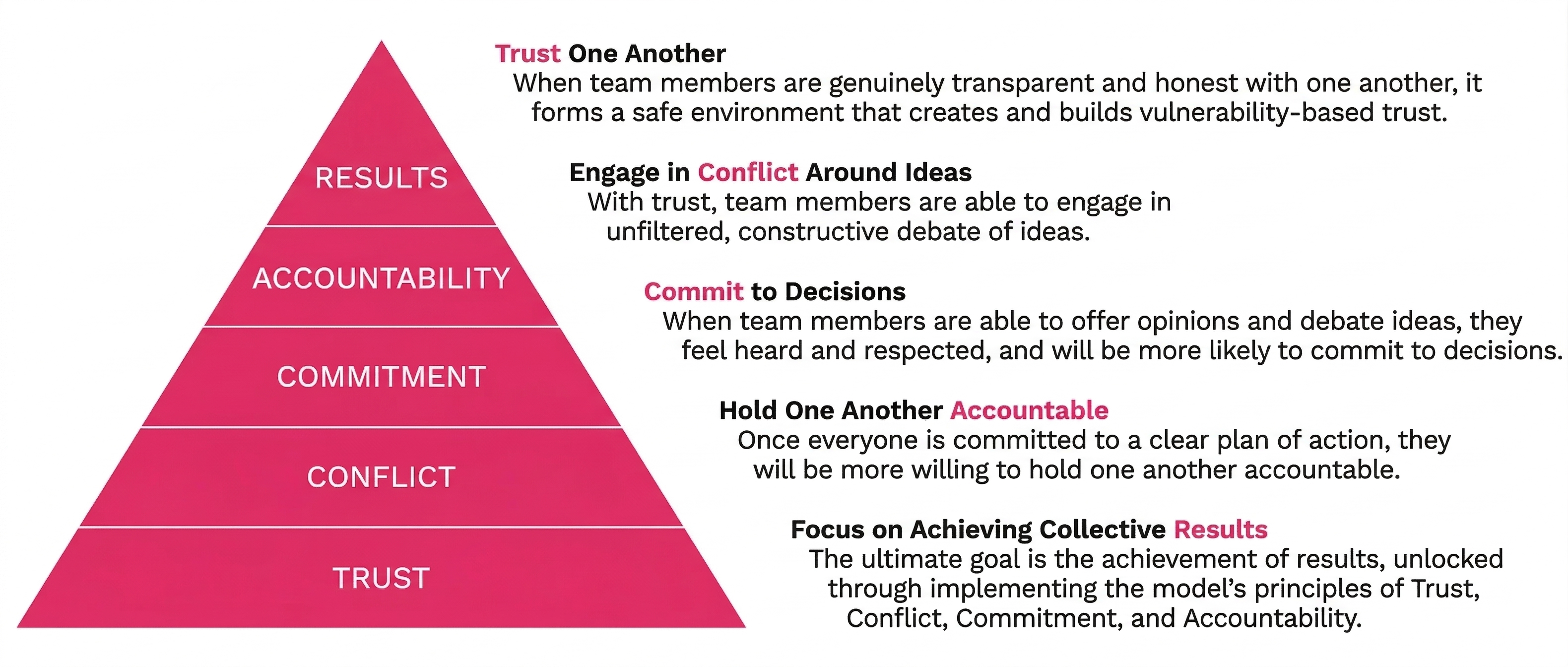
Lencioni describes five behaviours that build on each other, from the foundation up:
The 5 layers:
Tamara summarised it beautifully…
When that foundation isn’t solid, everything above it becomes harder to sustain, especially under pressure.
“Building cohesion is delicate and it can be broken quickly.”
That is exactly what we see in leadership teams under pressure…
A new CEO. A newly formed executive team. A merger. A strategic reset. An ever-changing market.
In moments like these, the leadership team is not only working things out internally. The organisation is watching how the team behaves. People want to know: Do they trust each other? Are they truly aligned? Can they lead us through this?
As Miranda put it: “You need employees to truly believe that this leadership team is the right team to lead the change.”
Tamara shared an example from a merger where the first meeting felt like two sides facing off. Leaders even described each other as “the enemy”. When that is the starting point, cohesion isn’t a “nice to have”. It becomes the groundwork for performance. Without it, decisions slow down, collaboration stays stuck, and change never fully lands in the organisation.
And the context leaders operate in today makes this even more important. Strategic decisions are rarely just operational. They touch ethics, geopolitics, sustainability and stakeholder pressure. That makes conversations more sensitive, and sometimes more polarising.
“If you cannot enter into trust and conflict, the company simply cannot move forward.”
That is why an aligned team is not conflict-free. It is conflict-capable. It can disagree, stay connected, and still walk out with shared commitment and clear action.
That is what leadership maturity looks like now.
Through our Six Batteries of Change scan, we first identify where energy is leaking in the organisation. Very often, one of the batteries that requires attention is the Top Team Battery: the alignment, trust and shared ownership within the leadership team itself.
When that battery is underpowered, frameworks like Lencioni’s can serve as a focused intervention. An assessment creates clarity around how the team scores on trust, conflict, commitment, accountability and collective results. But the real value lies in what follows: a facilitated deep dive into behaviour.
Where does the team avoid tension? Where does ownership become conditional? Where are decisions reinterpreted outside the room? These conversations are part of a bigger journey the top team goes through. There’s no ‘quick fix’ for trust. It takes time and multiple efforts of the team and individuals.
The framework provides language. The shift happens in how the team commits to operating differently.
From their certification, an important takeaway stands out: the assessment can be a helpful starting point, but it is the conversation that creates real movement.
The diagnostic brings clarity. It makes patterns visible that teams often sense, but struggle to name. It creates a shared language for what is working and what is getting in the way.
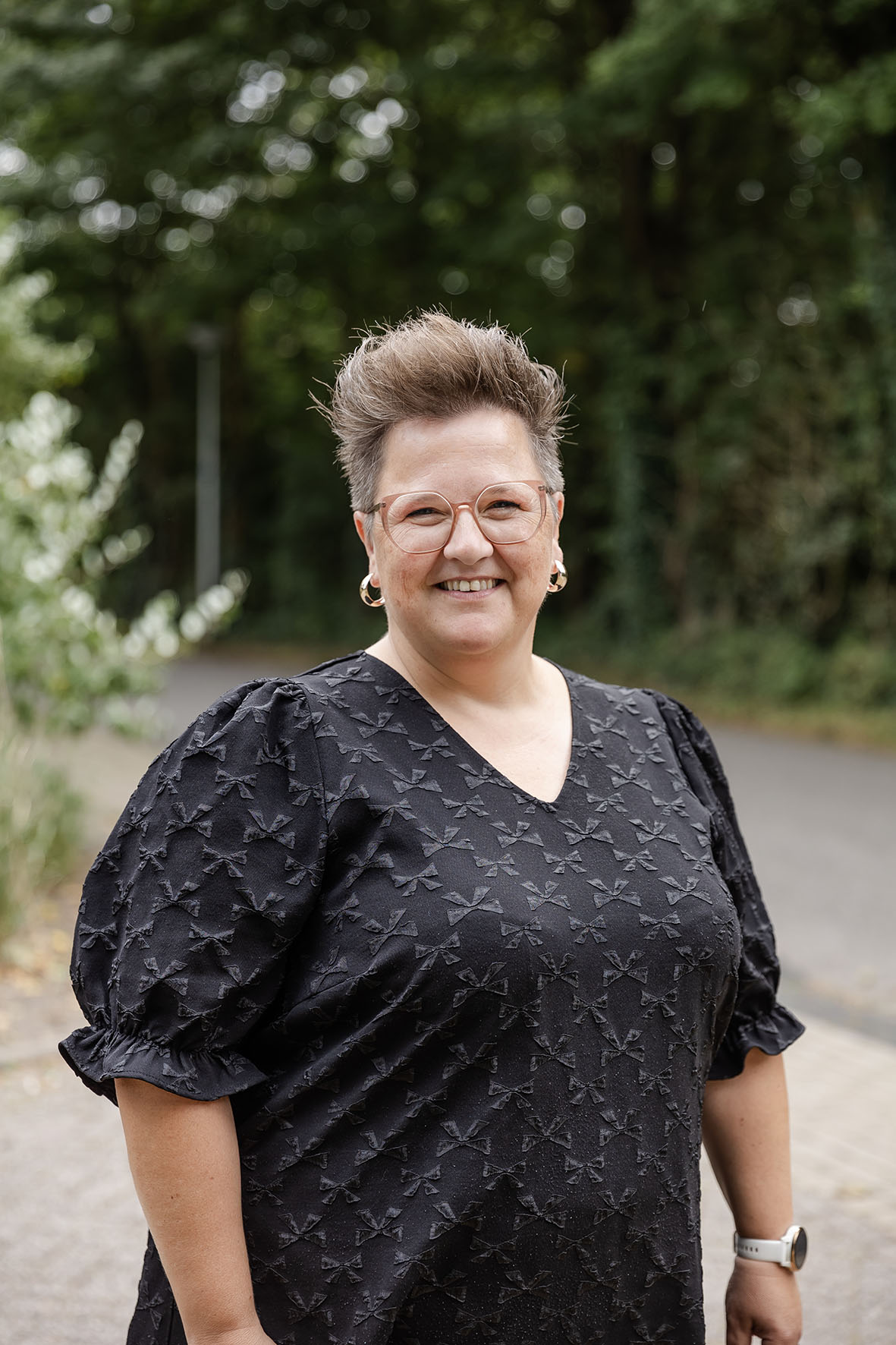
“A number on its own doesn’t transform a leadership team.” – Tamara Alen, Business Transformation Manager
And equally: “Tools are helpful, but they are never the solution…”
Ultimately, Lencioni’s model reminds us…
They are built on shared purpose.
“You don’t have individuals. You have a group that shares a collective vision.”
And when that collective vision is real…
At LQ, we see cohesive leadership teams as powerful change accelerators.
And that is when a leadership team stops being a collection of strong individuals…
…and becomes a truly aligned team.