“Culture is the hard part of your organisation.” That’s how Sander Asma, Managing Partner at LQ, opens this roundtable conversation. Your KPIs and your strategy are easy to change. The way people behave when the pressure rises is a truly different story. At the same time, it’s one of the biggest levers for success.
In this conversation, 3 LQ’ers take on a set of provocative statements about culture and leadership.
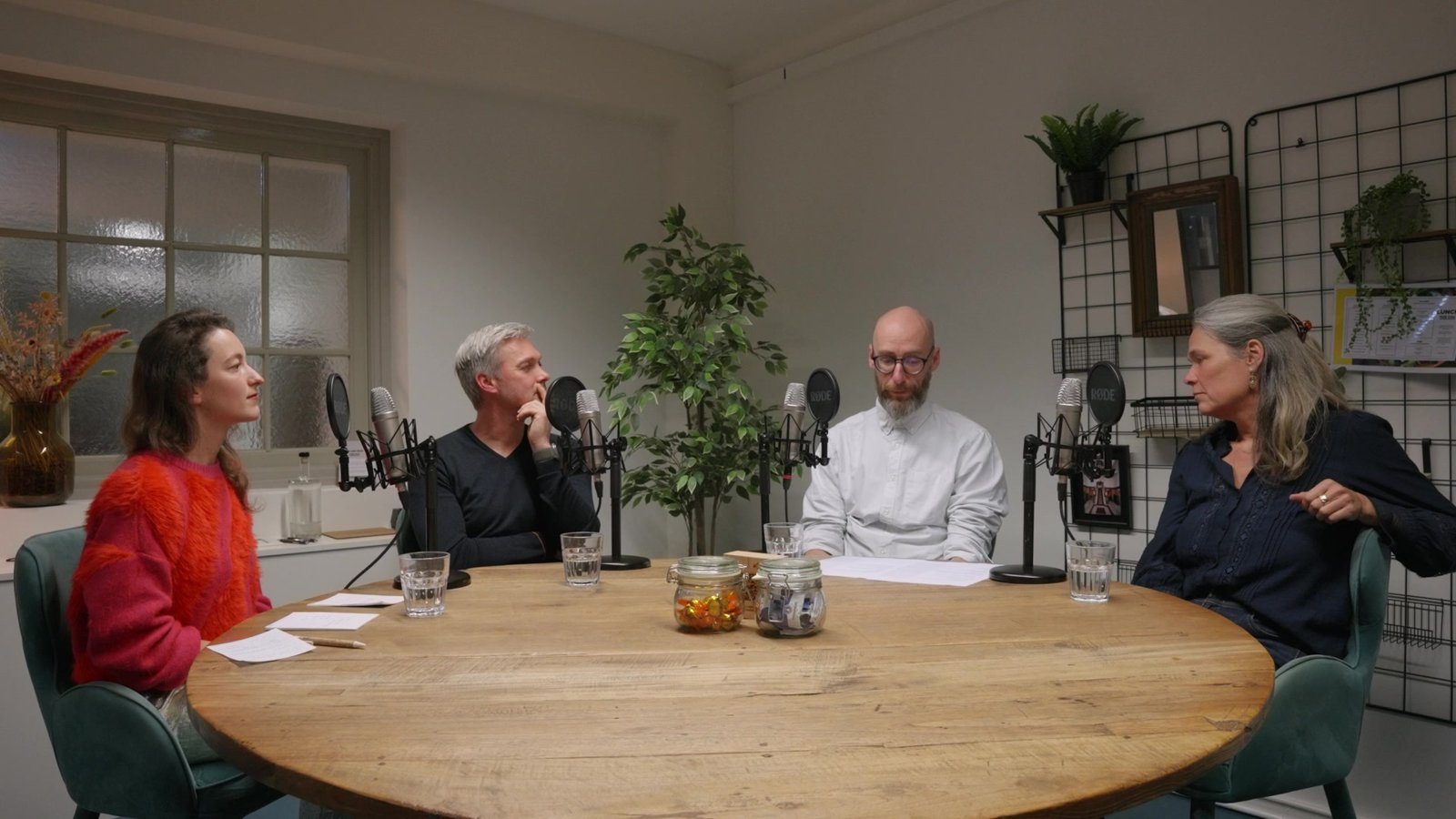
At the table: Sander Asma (Managing Partner), Gunter Blanckaert (CEO) and Chantal Poiesz (Managing Partner).
The conversation is in Dutch. Prefer to listen? It’s also the first episode of Energise for Success, our podcast on what truly moves organisations: find it on Spotify and Apple Podcasts. Or read on for the insights that stayed with us.
Organisations make strong strategic choices on paper. In our experience, that’s rarely where transformations stall.
Executing them is where it gets hard, because execution runs through the behaviour of leaders and their people. “To bring those choices to life and into execution, you need a mandate within a certain culture, and you need certain behaviour from leaders to take people along,” Gunter Blanckaert says. “If everyone is working in alignment towards the same goals, you can move mountains. When you leverage leadership that way, it can truly become a flywheel for the organisation.”
"If everyone is working in alignment towards the same goals, you can move mountains. When you leverage leadership that way, it can truly become a flywheel for the organisation."
Take one example. A company wants to respond to the uncertainty in the world by implementing an innovation strategy, complete with sprints and innovation teams. Yet, within that same company, there is a culture that punishes risks. How is that strategic choice ever going to turn into innovative solutions that matter to customers? The two flatly contradict each other. On paper you can make the right choices, but if they don’t translate into a solid culture, you won’t make much headway.
So that’s the short of it. Leadership sets the tone for culture. And culture decides whether your strategy on paper ever turns into real results.
At the same time, culture is one of the hardest things to change. “Changing your KPIs or your strategy isn’t that difficult,” Sander says. “But truly moving your organisation happens through the people who work in it.”
Can it be done? It can, and it starts with making culture measurable and tangible. “The moment you measure it, it becomes more concrete, more tangible, and above all easier to discuss, precisely with the people who might find culture and leadership fluffy,” Gunter says. In our work, even a first Six Batteries of Change scan pulls culture out of the vagueness. It shows where your values are lived on the work floor and where they only exist on paper.
Measuring is just the start. The conversation it opens is where culture actually starts to move. Looking together at which behaviours you want to see more of, and which ones you want to leave behind. Taking real steps in that direction, together. And recalibrating what “good” looks like along the way, because culture never stands still.
This requires courage from leaders. “You only truly change something in your culture when you also have the courage to give something up,” Sander says. “Otherwise every change is easy.”
"You only truly change something in your culture when you also have the courage to give something up. Otherwise every change is easy."
All of this sounds doable when you have all the time in the world.
But what about when times are hard, performance is taking a nose dive and stakeholders are pushing for yet another transformation programme to save the day? That’s the reality in many organisations we meet today. As a result, attention goes to running the business, almost by definition: it demands everything in the here and now, and it rewards you instantly. Teams that should provide clarity get bogged down in operational firefighting, and changing the business quietly drops to the bottom of the list.
What we need is a new type of leadership. Ambidextrous leadership: leading with two hands. Dedicating time to both running and changing the business in a way that doesn’t burn us out.
And yes, there is a magic word to make this happen. Rhythm. Give running and changing the business their own place on the agenda. What do we aim to do in each day, week, month, quarter? How many projects do we start, how do we stay aligned, which KPIs do we measure, and how do we report on them?
This also means making choices, even if you don’t know all the answers yet. Pick a lane and see it through. Instead of starting 12 projects, not knowing which will succeed, just focus on 6, and dedicate enough resources to each of them to make sure you will reach at least some positive outcomes.
Here’s an interesting paradox: turbulent times ask for leaders who slow down, truly connect with their people and get the foundations right. What we’ve learned is that chasing performance even harder rarely helps. The layer underneath does: trust, constructive conflict, real cohesion in your team.
Like Simon Sinek said: “I trust them with my life, but do I trust them with my money and my wife?” You can talk about performance and results all you want; it only holds when it goes hand in hand with trust. That’s what makes a leader a point of calm, an anchor for people, exactly when everything around them speeds up.
When it comes to culture and leadership, what’s the biggest lever on business results?
“The willingness to look in the mirror,” Chantal says. “And to truly practise what you expect from your people, to be the role model in it, and to show vulnerability in it too.”
"The willingness to look in the mirror. And to truly practise what you expect from your people, to be the role model in it, and to show vulnerability in it too."
So grab a blank sheet of paper and a pencil, and write down, in all honesty, what kind of leader you are today and where you still see yourself evolving.
Small as it sounds, that’s where culture change starts: one conscious action at a time.
What happens in your organisation when the pressure is on: do people still live up to the behaviours you agreed on?
If that question stayed with you, our Culture & Leadership page shows how we help organisations make culture and leadership truly tangible. Curious where to start? The Quick Scan gives you a first answer in minutes.
This transcript was translated from Dutch and lightly edited for readability.
Sander Asma: Culture is the hardest thing in your organisation.
Moderator: I've prepared a number of statements for today, so let's dive in. The first one is for Sander: leadership development mainly benefits leaders themselves. What do you think?
Sander Asma: A nice statement to start with. I certainly hope they get something out of it. But if the statement says they're the only ones who benefit, then I don't think we're heading in the right direction with leadership development. I believe you want leadership development to serve the development the organisation needs. And then I believe much more in an approach that helps leaders in their individual development, but also at the collective level of your broader leadership group, and in the context of the team. I'm quite visual, so I picture three cogs interlocking: individual development, collective leadership development and team development, reinforcing each other in service of what the organisation needs.
Chantal Poiesz: When you look at the organisations we work with, you see we indeed work with leaders on those levels, because they set the tone and they're the role models for leadership in the organisation. That also means they set the tone for culture, so you address it organisation-wide. The translation to the management and the teams underneath is just as important, and the individual component is part of it too. We see programmes with one-on-one executive coaching, for example, to build perspective and awareness: what's my impact as a leader right now, and what's the impact on the organisation? The more aware you are of that, the more you can be that role model.
Moderator: Clear. If we zoom out: why are leadership and culture truly business-critical, Gunter?
Gunter Blanckaert: I think they're so important because organisations make a lot of choices on paper: strategic choices, choices about processes and priorities. But to bring those choices to life and into execution, you need a mandate within a certain culture, and you need certain behaviour from leaders to take people along. When leaders show that behaviour, they can take their people with them, and you move much more powerfully from strategic direction to execution. When you use leadership that way, it truly becomes a flywheel for the organisation.
Moderator: At LQ you have the Six Batteries of Change. Leadership and culture sit in the bottom layer, the emotional one. How does that layer work through to the rational one at the top?
Gunter Blanckaert: We actually talk about balance a lot. You have the Six Batteries, in three pairs. On the strategic side, on the left, we talk about strategic direction, where you choose a direction, but where you also need the C-level or the top team to truly function well together. When that works, you can take further steps through the organisation, but they have to stay in balance. You can never do pure strategy without a cohesive top team: a team with trust, that dares to have conflict, and that holds each other accountable. That's an essential foundation before you roll anything out further. Through middle management you then work on culture, getting teams on board and setting the right priorities. And from there you move to the operational side of the organisation: the two batteries on the right, where you turn plans into action, into projects that get delivered. And where people start to feel that what they do day to day truly contributes to the culture, and through the culture, to the strategic direction of the company.
Moderator: So that bottom layer is crucial. What do you typically see in organisations when those batteries run red?
Gunter Blanckaert: It can be a lot of things. On one side, leaders can say one thing and do another: behaviour on the work floor that doesn't match the culture or the values of the company. Employees see a mismatch between what leaders say and how they act towards people, teams or the organisation. I think that's a big one. And second, you often see that everything gets discussed in the boardroom: "this is the one story we'll bring to the organisation". But then everyone walks out, and each department hears a story that's purely about its own context. The overall story gets lost.
Sander Asma: What I find interesting is that leaders tend to judge themselves on their intentions, while the organisation sees and feels what they actually do. And the organisation mirrors it right back: "but this is what you do."
Moderator: Leadership is first and foremost about performance.
Sander Asma: I have a double relationship with that one, if I'm honest. When you steer purely on performance, and you look at something like the talent pyramid, we talk about shared results, about accountability, and then the question comes up: "we should give each other better feedback." But when you let teams colour in those layers, even roughly, you see there's usually still a lot to do on the trust layer, on constructive conflict, on having the real conversation. So if you only steer on performance, you don't create the layer that lets team dynamics reach the most operational level.
Chantal Poiesz: It makes me think of Simon Sinek and his story about the Navy Seals, with performance and trust as the two axes. "I trust them with my life, but do I trust them with my money and my wife?" It shows you can talk about performance and results all you want, but it has to go hand in hand with trust. You could also call it empathy: are you able to truly connect with your people? As a leader, you want to be a point of calm, an anchor for people.
Gunter Blanckaert: What we often see in organisations is leaders coming to us saying: "I ask everything of my team, but they don't do it, and nobody holds them to it." Then the question is always: do people actually know what's expected of them? They're not accountable, sure, but the root usually lies somewhere else. As a leader, it's important to look in the mirror: have I set expectations the right way? And am I in a rhythm where we don't talk about this once a year, but at several moments throughout the year? And not "are you on the numbers?", but: how is it going, where are you getting stuck, was this clear? Daring to ask questions until you reach the essence of what's expected. When you create that dynamic as a leader, you build the connection and the emotional foundation, and you move towards performance together. It becomes a joint responsibility.
Moderator: You mentioned running the business and changing the business. We live in a time where change keeps speeding up. Where does that friction show up most?
Sander Asma: What I see is that we're often running the business, because the here and now demands so much. That's where the focus goes, and that's what gives immediate results: "fixed it." That's exactly what makes it so challenging. In the scans you often see that this battery leaks energy and could use a recharge, because so much needs managing. And then it comes down to daring to choose. Do I dare to commit to something without knowing everything? Because there's a lot we don't know yet. Choosing, creating focus within that choice, and doing both: running and changing. And leading your people through it, being clear about it. When running and changing start to blur, you notice attention almost automatically goes to the running. A team that's supposed to lead a whole organisation and provide clarity gets bogged down in operational firefighting, every single time. What helps is steering much more sharply on what belongs on which agenda, at which moment in the day, the week, the month, the quarter. Everyone knows this. It's not rocket science. They've all been to business school, they all read the management literature. But then, under pressure, doing it anyway, on performing and on transforming at the same time.
Moderator: We've talked before about ambidextrous leadership. Leading with two hands, essentially.
Sander Asma: Yes, and letting the two go hand in hand instead of sitting on one side all the time.
Gunter Blanckaert: Many organisations carry a certain history with them. The context a company or its leaders are in strongly determines what's possible, and to what extent they can look in the mirror themselves. When the water is up to your lips operationally, that's a truly different context than when performance is strong and there's little movement around the company. The setting and context are almost always different in every company, so it asks for an approach that's slightly different every time. There are building blocks and foundations in leadership and culture development you can always bring, but the context strongly determines the rhythm, the speed and which building blocks you use at which moment.
Moderator: Culture is for softies.
Gunter Blanckaert: That's something we still hear quite often: culture is fluffy, culture is something for HR. Practice teaches us it's absolutely not. You can make culture truly tangible, and therefore measurable. Or the other way around: the moment you measure it, it becomes more concrete, more tangible, and above all easier to discuss with people who might find culture and leadership fluffy. From our Six Batteries, and the measurement and research behind them, you also see that how well culture runs, and how values are lived on the work floor, has a direct impact on business results.
Sander Asma: I'd say the real softies are the ones who still believe culture change is for softies. And you're putting the statement that way to provoke, of course. But then we almost have to go back to the origin of the Six Batteries of Change. The central question there was: why do 70% of all change efforts keep failing? I think that happens precisely because of the people who keep saying culture change is for softies. You keep focusing on one side of your organisation: strategy and performance. And you simply miss a truly big part.
Chantal Poiesz: And that's the nice thing about the Six Batteries scan: by doing it, you already make things much more tangible. You pull culture out of the vagueness. You can measure it, you can talk about results, you can grab hold of it.
Sander Asma: But mostly, I'd almost flip the statement: culture is the hardest thing you have in your organisation. And if you say it in English: it's the hardest to change. Changing your KPIs or your strategy isn't that difficult. But truly moving your organisation happens through the people who work in it. Looking together at what we truly want, taking steps in the right direction together, and recalibrating what "good" means along the way. Because that's not static either. That's what makes culture change real. You only truly change something in your culture when you also have the courage to give something up. Otherwise every change is easy. And that's where leaders step forward to set culture change in motion.
Moderator: So what do we truly need to talk about together? Otherwise it's: nice, we've made a new strategy, and we'll do the culture change on Friday afternoon.
Sander Asma: Right, we'll just schedule it in.
Gunter Blanckaert: An example I've seen many times: an organisation does solid, good work on strategic choices, puts a strategy on paper, and increasingly, driven by the uncertainty in the world, chooses some form of innovation: innovation teams, an innovation strategy. Which is essential in these uncertain times, where you want to spot opportunities and act on them. But then, within that same company, you have a culture where risks get punished and there's no innovation culture at all. How are you going to turn that strategic choice into truly innovative solutions that matter to customers and the outside world? Those two things flatly contradict each other. On paper you can make the right choices, but if they don't translate into a solid culture, you have a problem as an organisation.
Moderator: Culture also comes into play when two companies come together, in a merger or acquisition. Chantal, can you tell us about that?
Chantal Poiesz: In a number of cases I've been able to contribute to, you see the company is often still founder-led. The original founder is still there, and the company gets sold to a larger corporate, or to an organisation that's led in a particular way. Suddenly you're in a different setting. We merge the companies, we run the onboarding and integration through processes, financial systems, management philosophy. But not enough time goes into the real questions: how do these two cultures match? How do you do that? Where will we truly live the organisational values together, and what meaning do we give them? Different things get expected in a different context. When you go from family-owned to equity-owned, for example, steering shifts much more towards performance, KPIs, return on investment. That asks something different of people. How do you take them along? And when two teams with truly different DNA suddenly merge: what do you do with that? So it doesn't stop at "we did an offsite and had a nice day together". What does it ask of me as a leader, at different levels, to take the organisation along, to take each individual along? In these situations we often start by looking back: what do we need to let go of together before we can move forward? Otherwise it keeps coming back in the undercurrent. Or people keep referring to incidents from five, six, seven years ago. New people come in and inherit those stories. It's in the wallpaper, so to speak. Adjusting that piece of DNA and taking people along is essential, because you can roll in all the systems you want: at some point you'll see it literally affect performance, after a few years.
Gunter Blanckaert: And it usually surfaces far too late in the process. Truly many acquisitions simply don't succeed. The due diligence looks at the numbers, but nobody looks at whether the leadership style of the leaders coming in matches the culture of the ones already there. So what are we talking about: a merger or an acquisition? Why are we merging? Why are we acquiring? What are we taking over, what fits and what doesn't? That's looking further under the bonnet than just "how are they doing financially, what's the strategy worth, which clients are in the portfolio". It's also: what's the culture? How do people treat each other? Where's the added value towards the future? And you don't do that as the closing piece of your merger or acquisition process. You bring it forward and bring people together much earlier, depending on the why. And that why often isn't examined properly. Once the puzzle pieces are laid and organisations get merged, that's usually where it stops, while that's exactly where it needs to be picked up and followed through. That's not a short-haul effort but a long-haul one. Do it well, and you raise the odds that the integration truly succeeds.
Moderator: And you're bringing people together with their whole history.
Chantal Poiesz: You can want something badly, but you can't force cultures to blend. It's not paint.
Sander Asma: Right, we have blue, we have yellow, so our new culture will be green.
Gunter Blanckaert: And the colour can't go back into the tin. So maybe the comparison holds after all. But the point is: how do you lead that? The energy has to keep flowing. If you have two separate companies where the energy flows, that doesn't automatically mean it keeps flowing once you bring them together. You have to look deliberately at how to make it work.
Moderator: Which brings us back to the Six Batteries. Last question: what's the first thing leaders should look at on Monday morning?
Chantal Poiesz: What I hope they start every Monday morning with: take a good look at yourself in the mirror.
Sander Asma: Take a good look at the people around you, the people you care about. Don't lead if you don't love people. That's where it starts. If that foundation and that intention are right, we're happy to help anyone through whatever phase comes next.
Gunter Blanckaert: Literally a blank sheet of paper and a pencil. Write down: what kind of leader am I today? And above all: where do I still see myself evolving as a leader, and what does that take? You can easily find a few examples for yourself where you say: here's where I still have work to do, and I want to get after it. Putting that reflection on paper, just for yourself.
Chantal Poiesz: The willingness to look in the mirror. And to truly practise what you expect from your people, to be the role model in it, and to show vulnerability in it too. I think that's still quite a challenge for many of us as leaders. Which is understandable. But I do think it's one of the first steps to look at.
Moderator: Wonderful. Thank you all.