In this article you’ll:
Picture this: Your people are smart, capable, and fully committed. But they’re stretched thin: constantly switching between running today’s business and delivering tomorrow’s transformation. There’s no shortage of ambition, or projects. But with too many change initiatives at once, momentum slows. Energy drains. And your people feel the weight.
You might’ve launched one or two management leadership programs, but with little to no effect.
That’s because the real problem is this: Your top team is constantly initiating crucial business transformations, but your organisation is lacking the change capabilities to successfully embed them. Creating a constant tug of war between ‘what ought to happen’ and ‘what actually lands’.
And the cost is real. Slower momentum, underdelivering programs, and a strain on your people and systems.
So, how do you turn this around — and build the change muscle your organisation needs to deal with whatever comes its way? It’s all about embedding change capability into the DNA of your organisation.
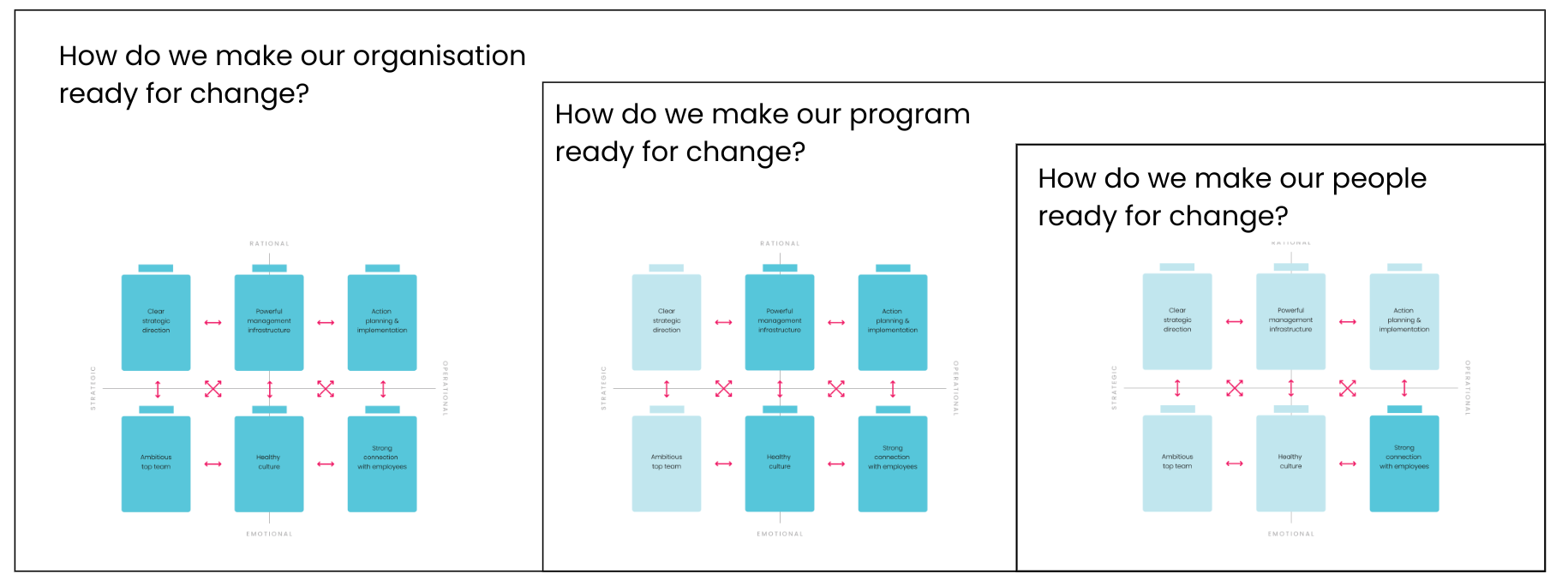
Transformation doesn’t happen in a vacuum, it happens in the system your people work in every single day. That’s why the first step is to make the invisible visible. Look beyond strategy decks and ask:
Where are we strong, and where are we leaking energy?
At LQ, we help leaders see what’s really going on beneath the surface of their transformation efforts. We make this visible with the Six Batteries of Change scan. It helps leaders pinpoint:
Each of the six batteries reflects a critical part of the system your people work in every day:
👉 Start taking targeted actions to charge these batteries.
The results speak for themselves: 95% of transformations that start with a Six Batteries Scan and sufficiently charged batteries deliver the intended result.
Structure is never the solution. It’s a tool. And a tool only works if you’re clear on what it’s meant to achieve.
What do you want to make easier? Faster? Stronger? What do you need to unlock in terms of collaboration or market position?
And just as importantly: do you really need each other to do it? If your teams or departments could operate just as well independently, forcing collaboration through structure won’t help.
LQ partnered with a global energy company operating across many countries to scan organisational readiness and uncover gainers and drainers. By training more than 100 leaders to read the results and translate them into action, the company built the internal muscle to drive transformation across multiple business units through change enablement.
No matter how strong the organisation, programs can stumble if they’re not designed for adoption. Programs succeed with the right focus and structure. When they’re set up with intention from the start. Not just technically, but in how people engage with them.
There are 5 practical ‘dials’ leaders and enablers can use to test program readiness.
👉 Ask yourself: If we launched this program tomorrow, would people know why it matters, what’s expected of them, and how it changes their work?
A structure only works if leadership does too. And yet leadership teams are often the weakest link: responsible on paper, but disconnected in practice.
Don’t just put your best functional experts in those seats. Place leaders who can build bridges – between people, departments, perspectives. Make sure they have a shared mission and mutual dependency. It’s not about working in parallel, but about building a system of collaboration.
Ultimately, transformation succeeds (or fails) one person at a time. The moment people hear about change, one question always comes up: “How will this affect my job and my daily work?”
Not everyone adapts at the same pace or in the same way.
So, as a leader, the real question becomes: “how do I know if my people are ready?”
To understand whether people are truly ready for transformation, LQ assesses change adoption using the Commitment Ladder. It helps leaders review how individuals experience, act on and adopt change.
It shows that commitment doesn’t happen overnight, but grows in stages:
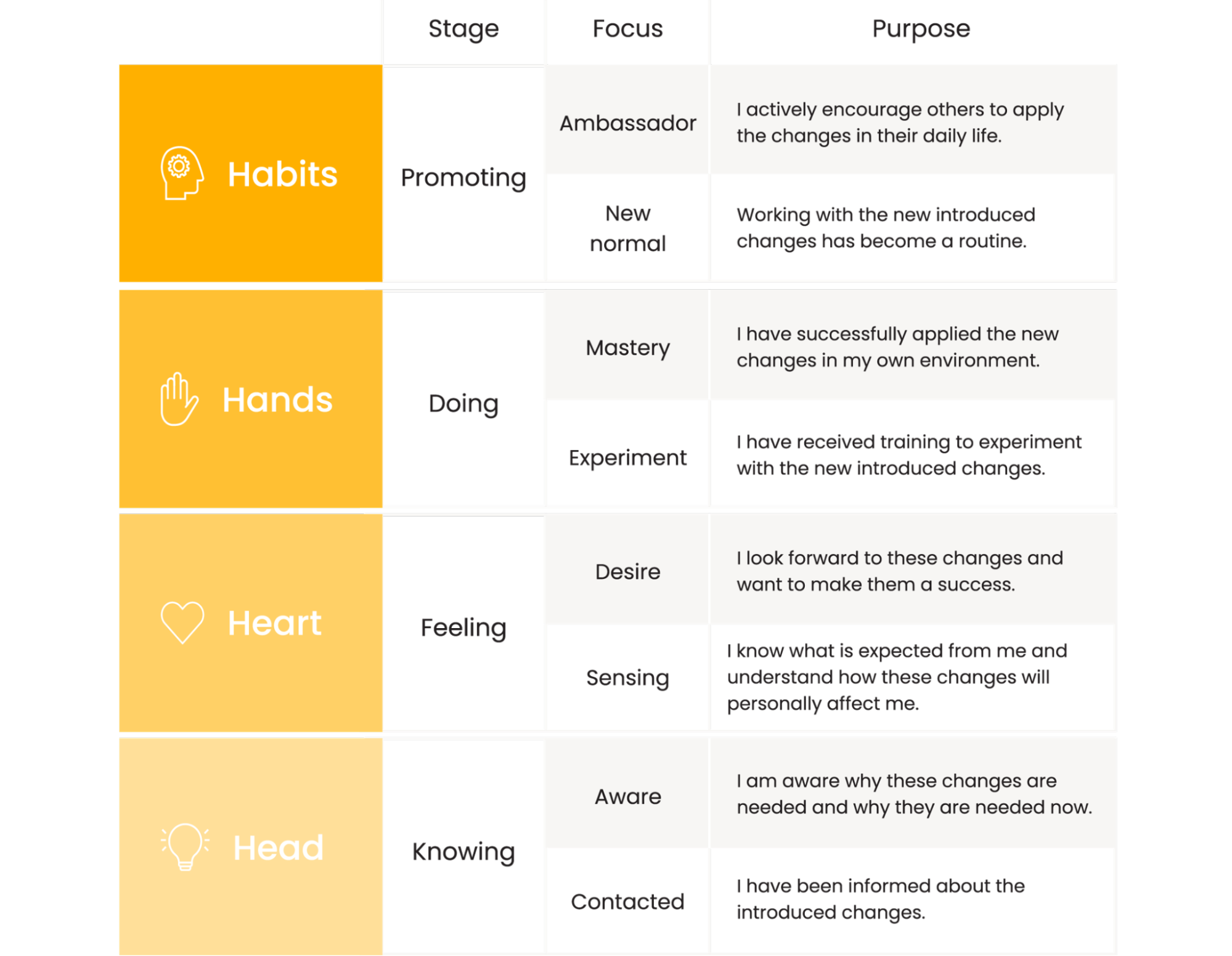
👉 Successful transformation means meeting people where they are on this ladder. Leaders need to communicate, support, and engage differently at each stage.
Change capability grows when people try it, test it, and make it their own. At LQ, we help organisations activate a growth mindset and create one shared language of change across leaders and teams. Our capability-building track is designed, so people don’t just understand change, they experience it, and practice it in their own context. By working on real challenges within the business, teams build confidence, alignment, and the skills to lead future transformations independently.
If you want transformation that lands and lasts, let’s map your readiness and design the right capability track for leaders and enablers, based on your data and in your business context.
Explore the capability-building track here or get in touch right away.